Heavy is the Head
We're thinking about judgment and AI all wrong


There’s a word I keep hearing in the conversation about AI: judgment.
It feels to me like now that we have lost our monopoly on the word intelligence, we’re reaching for something else to grab onto — something that feels squarely, uniquely human. So, we say: Only humans have judgment. I’ve even said it myself. But when I hear a word this often, I start to worry it’s losing its meaning.
When people say AI lacks judgment, I find they usually mean one of three things — all of which have some merit. First, that AI lacks the relevant information and context required to make a sound decision. (A technical problem that is shrinking by the day.) Second, that AI doesn’t reason like a human brain. (A biological reality … but does it really matter?) Third is the one I believe matters most, but is usually oversimplified: that AI lacks accountability for decisions. (We blather ad nauseam about a human in the loop, as if that solves how judgment is actually shaped and owned.)
To fully understand the implications of AI in decision-making, we have to walk through all three.
So, what do we actually mean when we say judgment?1 What does it mean to decide?
Judgment as Knowledge
In the before times, people accumulated knowledge, wisdom, and discernment — the raw materials of judgment — through experience. But the role of experience has changed — some have even called it a tax. I’m not sure I would go that far, but I do believe it’s become a more expensive way to acquire knowledge that is no longer scarce. That idea made me wonder what it means to learn from experience, and what remains distinctly human about decision-making.
A significant share of what we’ve historically called judgment is just exposure — to more situations, more examples, more trial and error. We relied on memory and pattern matching to recognize situations, which led us to make better, more confident decisions. That’s what gave the 25-year veteran a meaningful edge over even the sharpest three-year analyst. They’d built a pattern library that allowed them to recognize the signs of a reorg destined for disaster, the subtle tell of a would-be mis-hire, the moment an exec got an idea that would torch an entire org. Now, AI can hand you those patterns in seconds instead of decades.
That assumes AI has all the relevant context, of course. The facial expression that suggests someone is being less than forthcoming. The pregnant pause in a team meeting that means no one’s actually on board. The things we register without even realizing we’ve seen them. AI may not be fully there yet, but it’s plausible, maybe even likely, that it will be soon. This problem has a solution.
Judgment as Conviction
When we ask AI a question, its knowledge comes from statistical patterns extracted from a vast corpus of other people’s recorded experiences. It’s a valuable source of information, to be sure. But we tend to assume that because AI knows things, it has learned in the same way humans do. It hasn’t.
We focus so much on the role of the brain in learning that it’s easy to forget the brain is part of the body. If someone tells you not to touch a hot stove, do you learn that lesson the same way as if you actually touched it?
Much of what I write about is stories that have changed me, and most of those are lessons I have learned in my body. The heat climbing my neck into my cheeks when an exec asked a question I didn’t have an answer to. The hollow ache of watching someone I vouched for start to fail. My blood running cold as I discovered an error in an analysis the morning after a decision had been made. My heart pounding during the restless 3 a.m. replay of a trust-dashing sentence I blurted in a meeting, and the moot rehearsal of the version where I said it right. My stomach in free-fall the moment before telling someone they no longer had a job.
There’s another visceral feeling these experiences taught me, and that’s how it feels to operate in uncertainty. We assume deep experience breeds confidence — maybe even arrogance and stubbornness in our ways. My experience has mostly been the opposite.
Early in my career, I believed most problems had a right answer, and, for a while, gaining experience seemed to lead me to that answer faster. But over time, what might have made me more intransigent actually made me more humble, more curious.
I’m less sure than ever that there’s a single right answer to most questions I deal with. Tradeoffs are everywhere. Context changes the equation. Good ideas fail, and bad ideas succeed in spite of themselves. I developed confidence over time, sure, but I also developed interoception — a habit of listening to my own body for signals no transcript could ever tell me. I learned the somatic signatures of a prediction that doesn’t yet feel solid. (In retrospect, this is a lot of bodily overtime for one nervous system. I think my cardiologist would like a word.) After enough reps, I began to learn when to hold back, and when to proceed anyway. I’m still not always right. I don’t think anybody is.
I wonder if this will change as AI models improve. These tools will keep getting better at ingesting and synthesizing information, gathering context, weighing pros and cons, and even articulating precision and confidence in decisions. AI may not have a body, but that doesn’t mean it can’t arrive at something functionally similar by another way.
It’s possible that this problem, too, may be solved with more data. But there’s one that can’t.
Judgment as Accountability
Let’s say, for the sake of argument, that self-driving cars are far and away safer than human drivers — fewer accidents, injuries, deaths. Still, when a driverless car kills someone, we want a person to answer for it. Someone gets sued. Someone gets investigated. Someone answers to a governing body. Someone adds safeguards to the system. The responsible party isn’t a person behind the wheel. But it’s someone.
As far as I could find, the only clear case where a fully autonomous vehicle caused a fatality was in Tempe, Ariz. in 2018. A self-driving Uber struck a woman crossing the street at night. One casualty, compared to an untold number by negligent human drivers every year. After the incident, Uber suspended its autonomous vehicle testing program and never resumed.
A survey by AAA showed trust in self-driving vehicles was 13% in 2025, no higher than it was five years ago.2 People seem comfortable with assistive technology like automatic lane-keeping and emergency braking, but far less so with fully autonomous technology.
The origin of the word judgment is the Latin iudex, meaning judge. In Roman law, a judge who issued an improper, biased, or corrupt verdict was said to have “made the case their own” (iudex qui litem suam facit) and was required to repay the impacted party.
We want a person to be accountable. We resist letting responsibility dissolve into a system.
The same is true at work. When a mistake turns up in someone’s output, “AI messed up” is the new “dog ate my homework.” We say we keep a human in the loop, but a person rubber-stamping a decision they never had the time, context, attention, or agency to challenge isn’t accountability. If we can’t personally stand behind what we produce, what is it actually worth? AI may well outperform human decision-making. But if AI makes a call, who answers for it? Who loses their job when a disastrous decision is made? Who loses sleep over it that night?
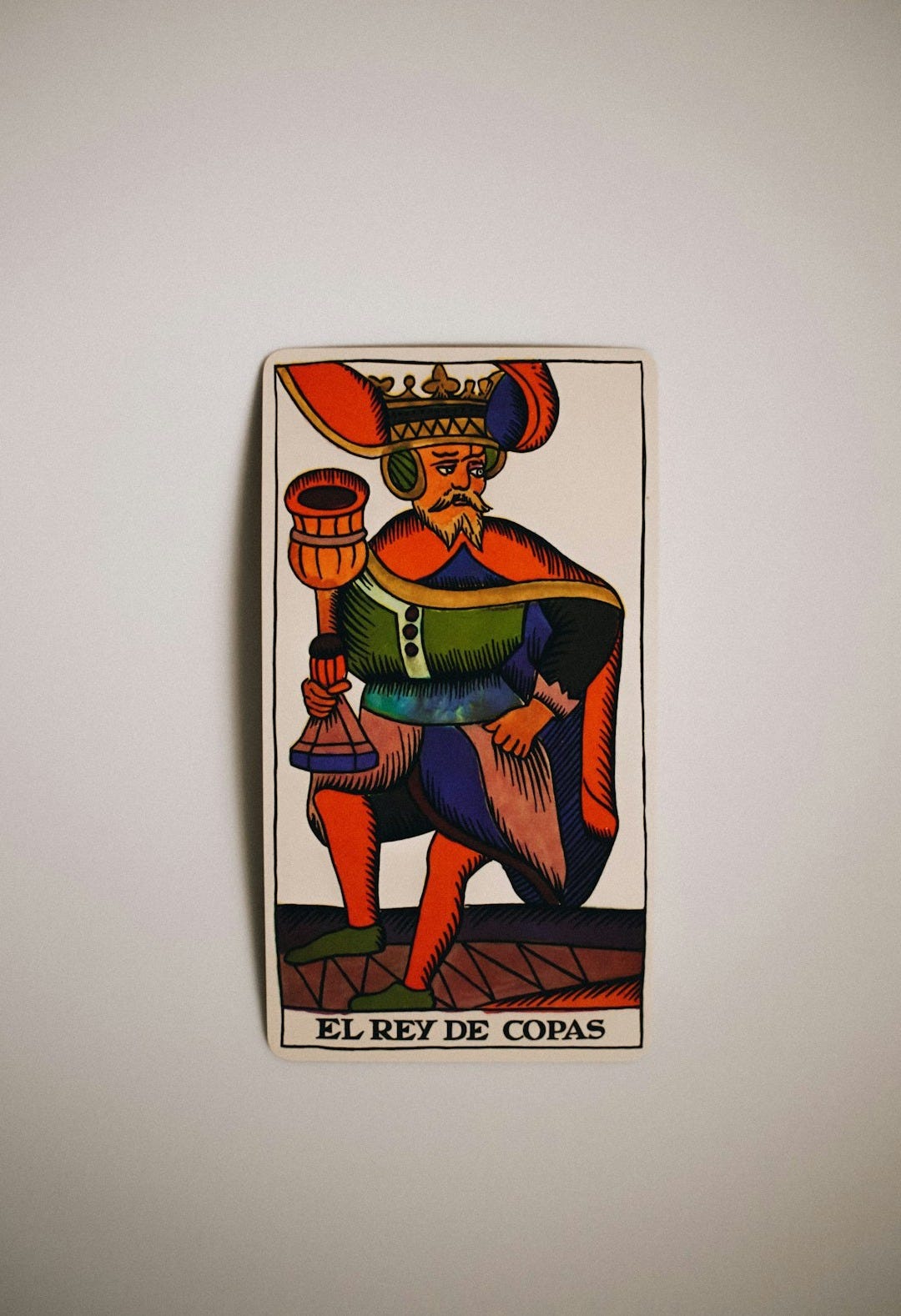
The Head that Wears a Crown
Recently, I spoke on a panel about people analytics and AI, and a sentence flew out of my mouth that wasn’t part of my talking points.
Being the head of a people analytics function, I said, is like being a human shield. We like to believe mistakes won’t happen. But, if you do this work long enough, they will. A meaningful chunk of our salary has nothing to do with our technical skills or consulting prowess. It’s to be the person standing to account when something goes wrong.
The hardest part of being a decision-maker isn’t making the decision at all — it’s wearing it when you choose wrong. AI will continue to improve. With the right information, it can hand you analyses, alternatives, tradeoffs, and confidence indices. What it cannot give you, though, is a body to stand in front of the blow.
Shakespeare described Henry IV in the throes of insomnia and wondering why a poor sailor boy might sleep soundly at sea — wet and rocked by a violent storm — while a king with all his comforts would, on the calmest and stillest night, be so encumbered by the weight of responsibility that slumber eludes him: “Uneasy lies the head that wears a crown.”
And, while we’re at it, can someone please explain why ‘judgment’ and ‘judgement’ both look incorrect to me? I digress…
https://newsroom.aaa.com/2025/02/aaa-fear-in-self-driving-vehicles-persists/